 Serbian
 Albanian
 English
 French
 German
 Russian
 Turkish
‘We failed to reach Europe – now our families disown us’
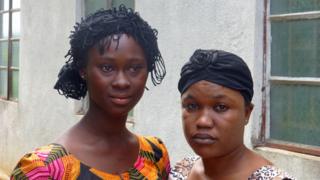
Most of the West African migrants who fail to reach Europe eventually return to their own countries, but it can be a bitter homecoming. In Sierra Leone, returnees are often rejected by relatives and friends. They’re seen as failures, and many stole from their families to pay for their journey.
Some readers will find this story disturbing
Fatmata breaks into sobs when she remembers the six months she spent in slavery as the “wife” of a Tuareg nomad who seized her in the Sahara desert.
“They call him Ahmed. He was so huge and so wicked,” she says. “He said, ‘You are a slave, you are black. You people are from hell.’ He told me when somebody has a slave, you can do whatever you want to do. Not only him. Sometimes he would tell his friend, ‘You can have a taste of anything inside my house.’ They tortured me every day.”
That was only the beginning of the horrors Fatmata, aged 28, from Freetown, Sierra Leone, experienced as she tried to cross West Africa to the Mediterranean. She eventually escaped from Ahmed, but was recaptured by traffickers who held her in their own private jail in Algeria.
After she and other migrants broke out, Fatmata, deeply traumatised, decided to abandon her dreams of a new life in Europe – and go back to where she started. She applied to an intergovernmental agency, the International Organisation for Migration (IOM), which pays the fares for migrants who want to return home.
Last December, she arrived back in Freetown, by bus from Mali – after nearly two years away. But there were no emotional reunions, no welcomes, no embraces. Nearly a year later, Fatmata hasn’t even seen her mother – or the daughter, now eight, she left behind.
“I was so happy to come back,” she says. “But I wish I had not.”
Find out more
Listen to Sierra Leone – the price of going home on Assignment, on the BBC World Service
When she got back, she called her brother. But his reaction terrified her. “He told me, ‘You should not even have come home. You should just die where you went, because you didn’t bring anything back home.'”
After that, she says, “I didn’t have the heart to go and see my mother.”
But her family didn’t reject her just because she was a failure. It was also because of how she funded her journey.
She stole 25 million leones – about US $2,600 at today’s exchange rate, but then worth a lot more – from her aunt. It was money her aunt had given her to buy clothes, that could then be resold as part of her trading business. Her aunt regularly trusted her in that way.
“I was only thinking how to get the money and go,” Fatmata says, though she adds that she’s not a selfish person. “If I had succeeded in going to Europe, I decided that I would triple the money, I would take good care of my aunt and my mum.”
But Fatmata’s aunt’s business never recovered from the loss of the money. And – to make things even worse – the theft has caused a rift between the aunt and her sister, Fatmata’s mother, whom she falsely accuses of being in on Fatmata’s plan.
“I’m in pain, serious pain!” her mother says, when I visit her. “The day I set eyes on Fatmata, she will end up in the police station – and I will die.”
It’s a story that’s repeated in the families of many of the 3,000 or so Sierra Leoneans who have returned in the last two years after failing to reach Europe.
At one time, relatives often raised the money to send someone, but there’s less willingness to do that now that stories of imprisonment and death along the route have multiplied. Now, many would-be migrants keep their plans secret, and take whatever money they can, sometimes even selling the title deeds to the family land.
At the headquarters of the Advocacy Network Against Illegal Migration, a voluntary group that helps returned migrants rebuild their lives, all the returnees I meet have stolen from their families.
Jamilatu, aged 21, who escaped with Fatmata from the traffickers’ prison in Algeria, took a plastic bag of cash worth $3,500 from her mother’s room when she was out of the house. The money didn’t even belong to her mother. It had all been lent to her by neighbours, as part of a microcredit scheme.
After Jamilatu left, the furious creditors besieged her mother’s house, threatening to kill her if she didn’t return the money. She was forced to flee Freetown for Bo, three hours away in the south of the country, leaving her three other children behind with their father.
“My mum doesn’t want to talk to me, because of the money,” Jamilatu says. “So since I came back, I haven’t seen her. And I want to see my mum – it’s over two years now that I’m not seeing her.”
I visit her mother, Maryatu, at her new home in Bo, and after a long conversation she says she would like to see Jamilatu again, despite the suffering she’s caused.
But when they meet, soon afterwards, it’s a short, awkward and almost silent reunion. They embrace stiffly. Then Jamilatu kneels in front of her, asking for forgiveness. Neither looks the other in the eye.
Afterwards, Jamilatu goes straight back to Freetown.
“I am the happiest woman on Earth today because I have seen my mum,” she says. But she doesn’t look happy. Her mother has told her they can’t live under the same roof again until Jamilatu has raised the money to repay the creditors.
It’s hard to see how that will be possible. Jamilatu, like Fatmata, has no job. They both depend on support from Advocacy Network Against Illegal Migration. The group was founded by Sheku Bangura, himself a returned migrant, who lobbies the Sierra Leonean government to do more for returnees – currently there’s very little official support – and tries to give practical help himself. He finds accommodation for those who are homeless, intervenes with the police if returnees get into trouble, and organises basic psychological counselling.
“I have had a lot of migrants who have mental problems,” he says. “These young people, they are on the streets, they don’t have place to sleep. It’s not really easy for them.”
One of those helping out at the Advocacy Network is 31-year-old Alimamy, who set out across the Sahara three years ago, after stealing and selling an expensive water-packaging machine belonging to his uncle.
One of his two travelling companions died of starvation in the desert. The second drowned trying to cross the Mediterranean in a dinghy. Alimamy ended up in a Libyan detention camp. He was only rescued in November 2017 when the IOM began organising flights from Tripoli to West Africa for those who wanted to go home.
Emaciated and exhausted, he accepted the offer of a ticket, but he was terrified of the reception he would get. “I was thinking I should not come back to Sierra Leone, because I know my uncle has a very high temper,” he says.
Since returning, Alimamy has lived with friends. His elder brother, Sheik Umar, a former professional footballer, says: “We are hearing he is in Freetown, he is suffering. And yet he hasn’t got the guts to face any of us in the family.”
Sheik Umar says he used to be close to his brother, but if he sees him now, he will ensure he is “arrested, prosecuted and convicted”.
“If he dies in prison, I will not have any regrets, I am sure no family members will have regret, because of the shame he has put on all of us.”
He says the water-packaging business Alimamy had been entrusted to run by his uncle could have generated enough money to support the whole family.
“But he misused that opportunity and all of us are in this mess now… Wherever I go now, people taunt me. Our mother is sick, she has moved to a village. That (business) was the beginning of our hopes. But Alimamy has shattered all of that.”
Alimamy himself is angry and frustrated. “I have come back home, no impact, just like I’m zero,” he says. “The place where I am living, it’s like a hell for me. The way people look at me, I don’t feel happy. They’re looking at me like I’m not human.”
The IOM offers migrants who return voluntarily to their home countries in Africa “re-integration allowances” worth up to 1,500 euros (GBP1,270). The money comes from a 347m-euro fund financed mainly by the European Union. But the allowances aren’t paid in cash. If they were, most people would just use them to repay their relatives. So the IOM pays for goods or services that applicants can prove they need to set up a specific business.
Alimamy got an allowance to buy a motorcycle to rent out to other drivers to use as a taxi. But after just four months, one of the drivers went off with it and never came back. Alimamy himself had become a victim of theft.
As for Fatmata and Jamilatu, they never received an allowance because they returned from Mali at a time when some other Sierra Leoneans were abusing the system by catching a bus to Mali, pretending they’d returned from across the Sahara, and claiming the allowance. So everyone returning from Mali lost out, including Fatmata and Jamilatu.
Now, all three returnees take part in “awareness-raising” events organised by the Advocacy Network. They go out on the streets with placards and loudspeakers to warn other young people of the dangers of illegal migration, and urge them to stay in “sweet Sierra Leone”.
But for them, home is no longer sweet. All three are consumed by feelings of worthlessness.
Fatmata says: “I have nothing to offer, I have nothing to show. I can’t even go and see my daughter, I only see the pictures, because I have nothing to give her when I get there, so I can’t.”
Alimamy says the “stigmatisation” he suffers is forcing him to do the opposite of what he says on the streets. He wants to make another attempt to reach Europe.
“Staying here is like a hell for me,” he says. I remind him of the horrors he experienced on his first attempt, being enslaved, imprisoned, and seeing friends die.
“Well,” he says, “I have been through that, and I’m sure I could cope.”
You may also be interested in:
Azis Hanna, from Iraq, was about to pay smugglers to get his family across the English Channel in an inflatable boat. But when his friends nearly died he thought again.
READ: Crossing the Channel by boat is risky – we came by lorry
0 comments