 Serbian
 Albanian
 English
 French
 German
 Russian
 Turkish
In pictures: Havana celebrates 500 years of foundation
Cuba’s capital, Havana, is one of Latin America‘s architectural treasures, boasting a fascinating mix of colonial, Baroque and Art Deco styles. Many of its jewels have suffered from decades of deterioration but, slowly, complex renovation works are bringing some of them back to life. As the city celebrates 500 years of its foundation on 16 November, here is a look at some of its most famous buildings and sights.
Havana Cathedral
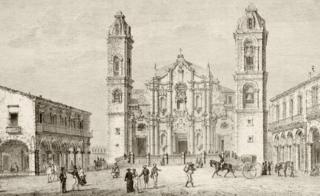
Image copyright
UniversalImagesGroup/Getty
The Havana Cathedral, or Catedral de San Cristobal, was built between 1748 and 1777 and consecrated in 1782. The Baroque building (seen in the picture above in the 1880s) has two asymmetrical bell towers and its main facade is rich in details.
A number of artworks including sculptures and paintings are exhibited inside, where the central nave floor forms a Latin cross.
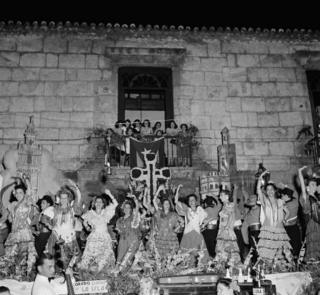
Image copyright
Michael Ochs Archives/Getty
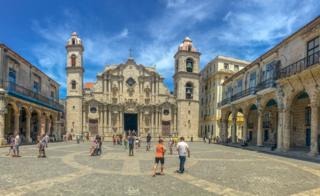
Image copyright
Roberto Machado Noa/Getty
For 100 years the cathedral held the remains of explorer Christopher Columbus before they were transferred back to Spain after the Spanish-American War in 1898, which led to Cuba’s independence.
The building (seen in the first picture above during a celebration in 1946) is located at Plaza de la Catedral, one of the five main squares of Old Havana, a Unesco World Heritage site.
Paseo del Prado
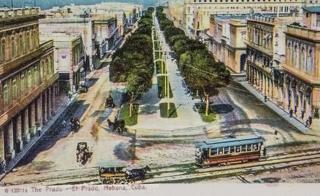
Image copyright
Allan Seiden Legacy Archive/Getty
The Paseo del Prado (seen in the picture above in 1915) was built in 1772 and quickly became one of the city’s most popular sites. In a redesign by French landscape artist Jean Claude Nicolas Forestier in the 1920s, it got the trees, bronze lions sculptures and marble benches that exist to this day.
Some of Havana’s most renowned buildings, including the Gran Teatro de La Habana, Hotel Sevilla and Capitolio are around this boulevard, which marks the western edge of Old Havana, where some 900 buildings of historical value are located.
But insufficient maintenance amid decades of economic hardship and a crippling US trade embargo have meant that buildings here – and in the rest of the capital – deteriorated, a few even collapsed. While some have been restored in recent years others are still in a precarious state.
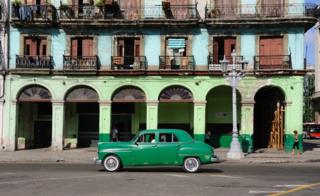
Image copyright
Frederic Soltan/Getty
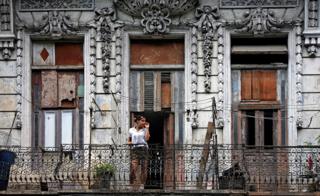
Image copyright
REDA&CO/Getty
“Havana luckily conserved its valuable architectural patrimony, unlike other Latin American cities that lost a good part of their historic centres’ patrimony due to real estate development,” Gina Rey, a Cuban urban planning specialist, told Reuters news agency.
“But paradoxically this patrimony is very deteriorated, and [renovation] efforts haven’t been enough so far.”
Capitolio
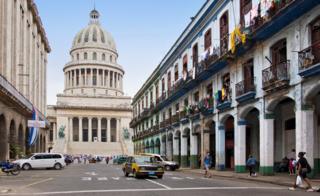
Image copyright
Marka/Getty
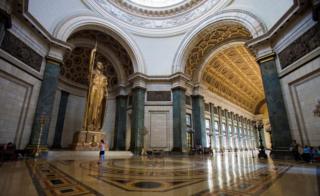
Image copyright
REDA&CO/Universal Images Group/Getty
The Capitolio (seen in the first picture above in 2012) is one of Havana’s most iconic buildings. Reminiscent of the US Capitol in Washington, it was commissioned by President Gerardo Machado to house Congress, took three years to be built and opened its doors in 1929.
After the 1959 Communist revolution led by Fidel Castro, parliament was dissolved so the building of classical columns and enormous salons served as the headquarters of the Cuban Academy of Sciences and the Science Ministry. It has gone through major renovations in recent years to once again house the National Assembly.
Gran Teatro de La Habana
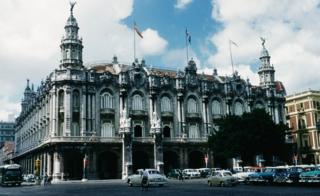
Image copyright
Harvey Meston/Getty
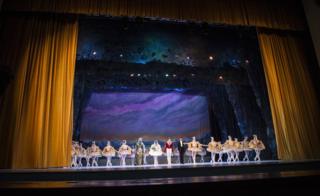
Image copyright
Anadolu Agency/Getty
Opened in 1915, the Gran Teatro de La Habana (seen in the first picture above in 1959) is home to the Cuban National Ballet and International Ballet Festival of Havana. The Neo-Baroque building was initially a Galician community centre, and was built around the former Teatro Tacon, which had opened in 1838.
It also has a concert hall, a cinema, a gallery and rehearsal and conference rooms. Barack Obama made a speech there in 2016 during the first visit by a US president to the island since 1928.
Hotel Nacional
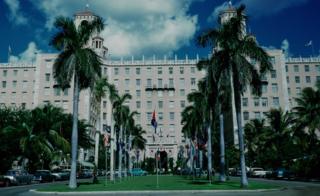
Image copyright
Archive Photos/Getty
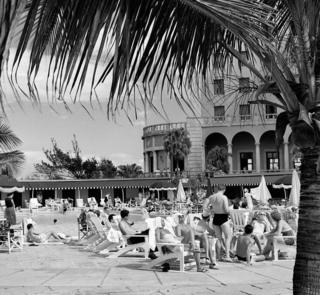
Image copyright
H. Armstrong Roberts/ClassicStock/Getty
Another grandiose edifice whose construction began in the 1920s, the Hotel Nacional was created at a time when Cuba was a popular destination for US tourists. Opened in 1930, the elegant Art Deco building sits on the Taganana Hill in the Vedado neighbourhood and has fantastic views of the sea and the city.
Famous guests to have stayed at the hotel include Winston Churchill, Jimmy Carter, Frank Sinatra, Ava Gardner and scientist Alexander Fleming. The hotel has been declared a National Monument and the guns that were part of the old Santa Clara Battery during the 1962 Cuban Missile Crisis are on exhibition in its garden.
Edificio Bacardi
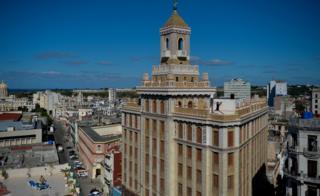
Image copyright
Yamil Lage/Getty
Considered one of the finest examples of Art Deco in Latin America, the Edificio Bacardi (seen in the picture above in 2019) was designed to be the headquarters of the Bacardi Rum Company in Havana. It was completed in 1930 under a 300-day deadline imposed by the company.
The firm was nationalised by Castro in the 1960s and the Bacardi family relocated their business to Bermuda. In 2001 an Italian firm restored the building, which still maintains its original interior decor with marble and granite imported from Europe.
Malecon
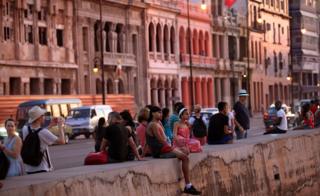
Image copyright
David Silverman/Getty
Havana’s iconic sea-side avenue was designed to serve as a seawall to protect the city. Construction started in 1901 and the broad thoroughfare stretches for 8km (five miles) from Old Havana to the Vedado neighbourhood.
It is still a popular spot for couples, families, artists and tourists. And while many of its buildings show the signs of years of neglect, recent economic reforms have translated into new businesses that have refreshed one of the city’s most recognised addresses.
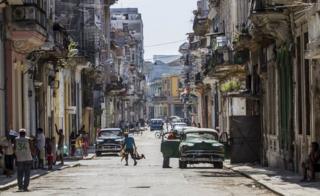
Image copyright
Brazil Photo Press/Getty
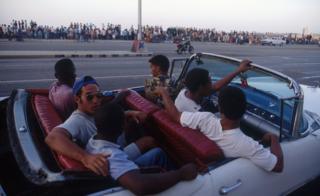
Image copyright
Antonio Ribeiro/Getty
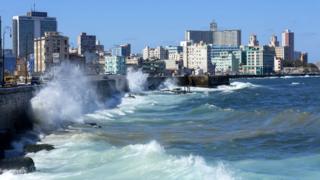
Image copyright
Alamy
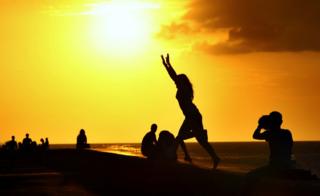
Image copyright
David Silverman/Getty
Sources: BBC Travel, Lonely Planet, La Habana Magazine
All pictures subject to copyright.
0 comments